What Sustainable Travel Looked Like in Northern Albania
The Journey North
Before this trip, I didn’t have a perfect definition of sustainable travel.
I still do not.
But traveling through northern Albania gave me a clearer picture of what it can look like in real life.
For us, it meant driving through the mountains instead of rushing from place to place, carrying some of our own food, refilling our water from a mountain spigot, staying in smaller local accommodations, eating at local restaurants, and spending time outside.
It was not a perfectly carbon-neutral trip.
We traveled by car.
But it was slower, more intentional, and connected to the places we visited.
That is what made it feel different.
The Journey North Was Part of the Trip
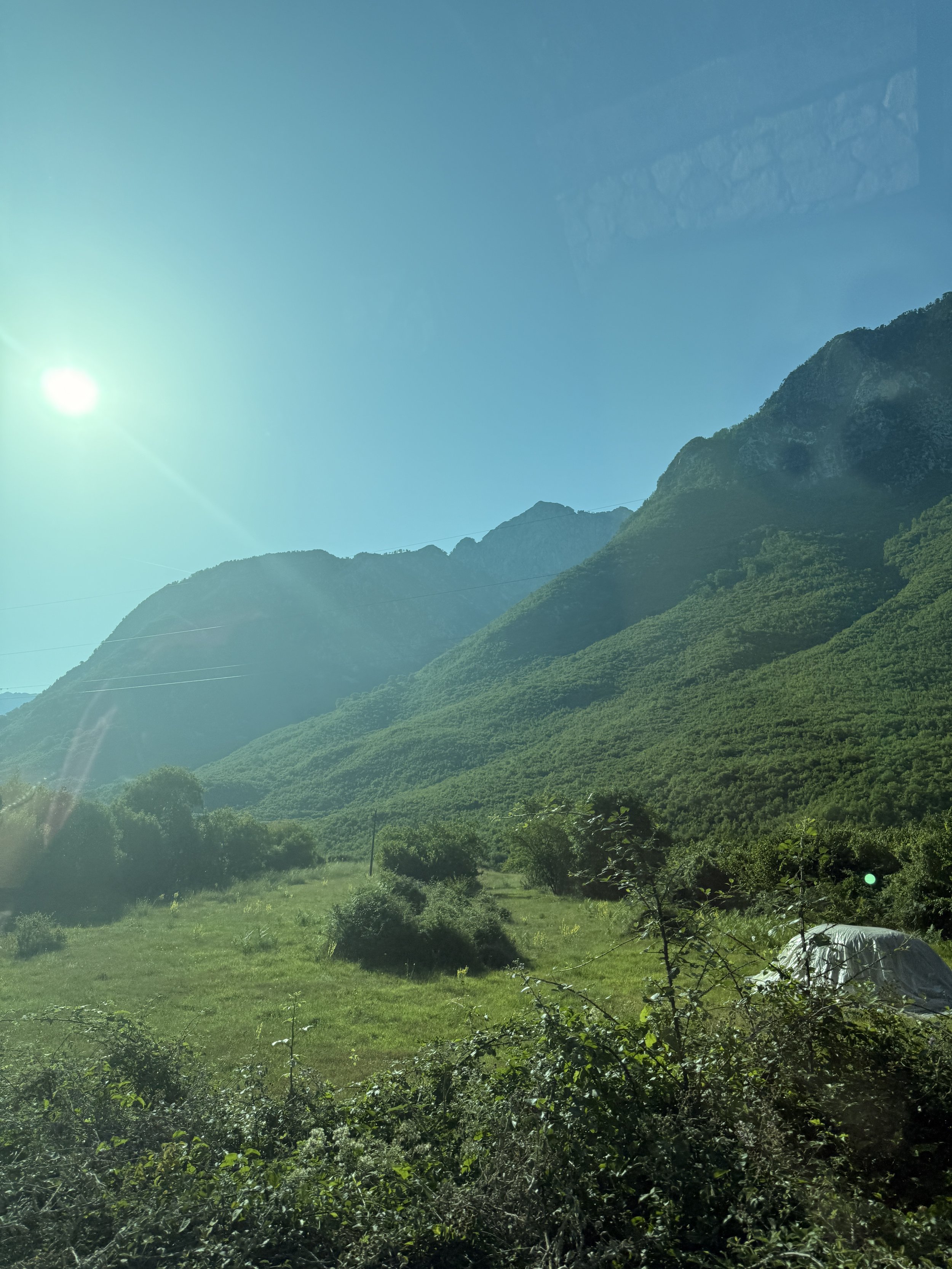
My host drove us from Tirana into northern Albania, through villages, countryside, mountain roads, and some of the most beautiful scenery I have seen since moving here.
The farther north we traveled, the more the landscape changed.
The roads became narrower.
The mountains became bigger.
The cities gave way to small villages, stone houses, forests, and open land.
We were not trying to squeeze several countries or five cities into a few days.
The drive itself was part of the experience.
We stopped when we needed to stop.
We looked around.
We took photos.
We noticed the towns and villages we passed through instead of treating them like empty space between destinations.
We Brought Food, but We Also Ate Locally
We brought snacks and breakfast supplies with us.
That helped us avoid buying something every time we got hungry, especially in areas where shops and restaurants were limited.
But we did not bring every meal.
We supplemented what we carried by eating at local restaurants, including dinner at Gjeçaj Alpine Restaurant.
That balance worked well.
We had food available when we needed it, but we were still spending money with local businesses and experiencing the food in the places we visited.
For me, sustainable travel is not about bringing everything from home and avoiding the local economy.
It is about being thoughtful.
Carry what makes sense.
Buy what you need.
Eat locally.
And try to make sure some of the money you spend stays in the community you came to experience.
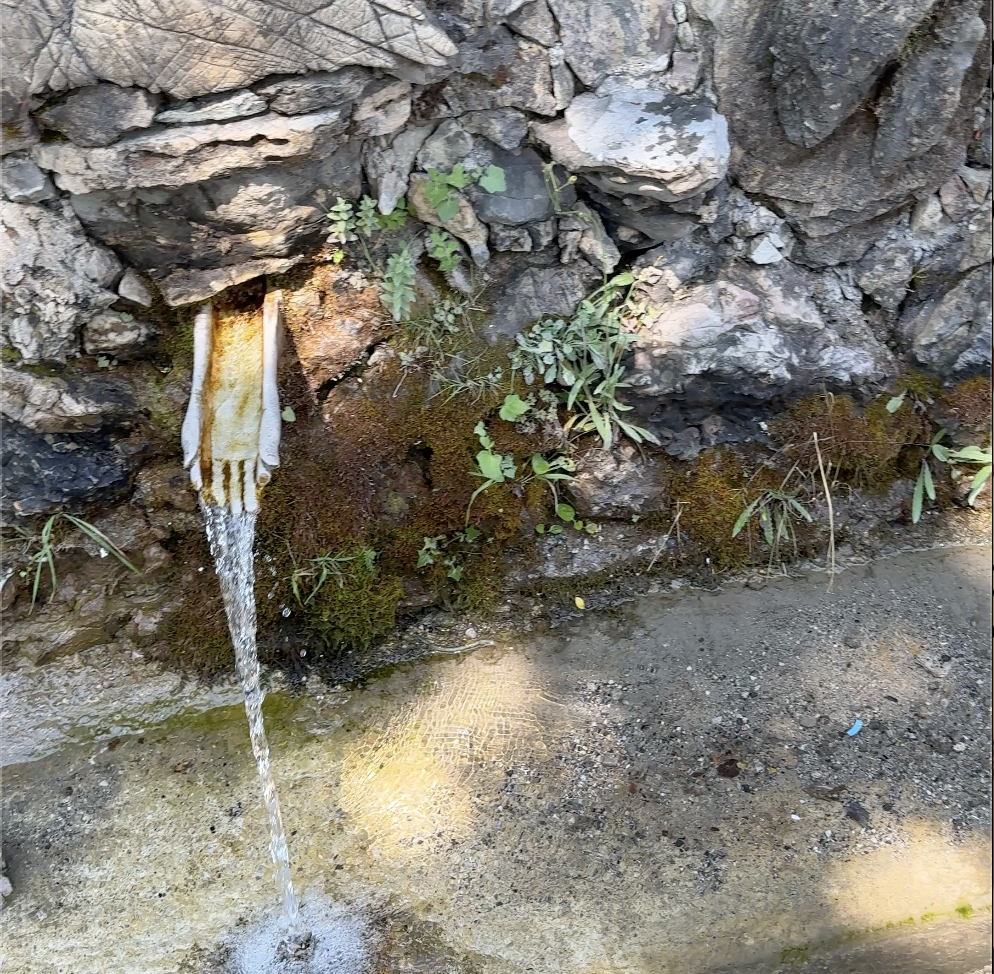
Mountain spring used to refill reusable water bottles during a road trip through northern Albania.
Refilling Our Water in the Mountains
One of the simplest things we did was also one of the most memorable.
We stopped to refill our water bottles from a mountain spigot instead of buying more bottled water.
The water was cold and fresh.
It was a small moment, but it captured the kind of trip we were having.
We were using what was already available instead of automatically buying another plastic bottle.
That does not mean every water source is safe or that travelers should drink from any random fountain they find.
But in this case, our host knew the source and stopped there intentionally.
Sometimes sustainable travel is not a grand gesture.
Sometimes it is just refilling the bottle you already have.
Staying at Logu i Harushave in Theth
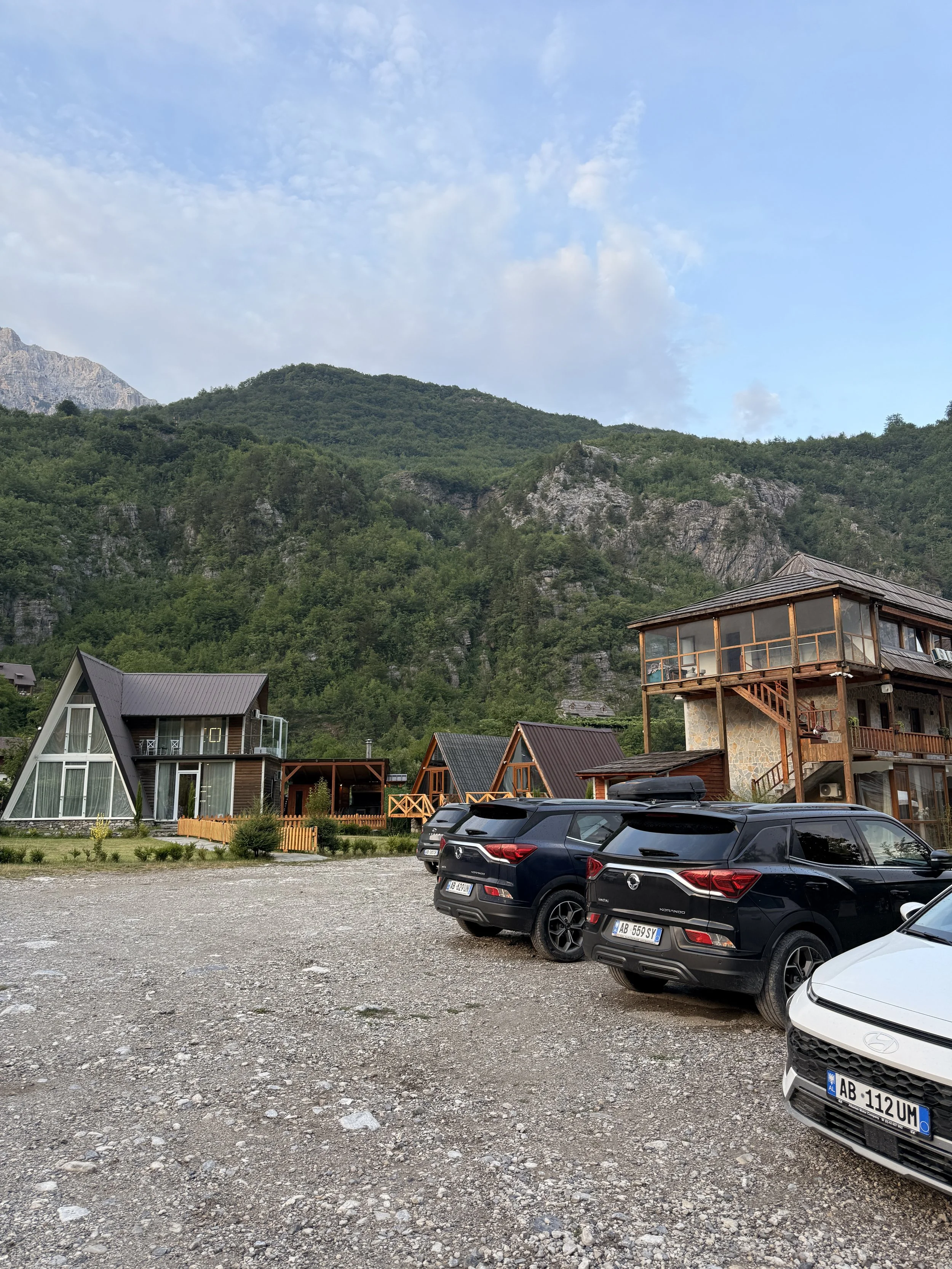
In Theth, we stayed at Logu i Harushave.
The property was surrounded by mountains and built into the landscape with stone paths, open green space, and simple mountain-style buildings.
Theth itself was beautiful, but it was also much busier than I expected.
This is not some completely undiscovered mountain village.
People come from all over Albania and abroad to hike, visit the waterfalls, see the Blue Eye, and spend time in the Albanian Alps.
There were guesthouses, cafés, restaurants, hikers, vehicles, and plenty of activity.
That was an important reminder for me.
A destination can look remote in photographs and still receive a large number of visitors.
Sustainable travel also means recognizing the pressure tourism can place on a small place.
Logu i Harushave
Hiking to the Blue Eye
The hike to the Blue Eye was one of the biggest parts of the trip.
The terrain was beautiful, but the hike was long and demanding.
The route is visited by hundreds of hikers, and the trail was busy.
This is not a quiet walk where you are likely to have the mountain to yourself.
We passed other hikers throughout the day, and there were cafés and places selling drinks and refreshments along parts of the route.
That support was helpful, especially during a long hike.
But I would still tell anyone doing it to bring plenty of water.
Do not assume you can rely only on what is available along the trail.
Bring water.
Bring a snack.
Wear proper shoes.
And be realistic about the distance and the terrain.
The hike was beautiful, but it was not effortless.
That is another part of traveling responsibly: preparing yourself properly instead of expecting the destination or local businesses to solve every problem for you.
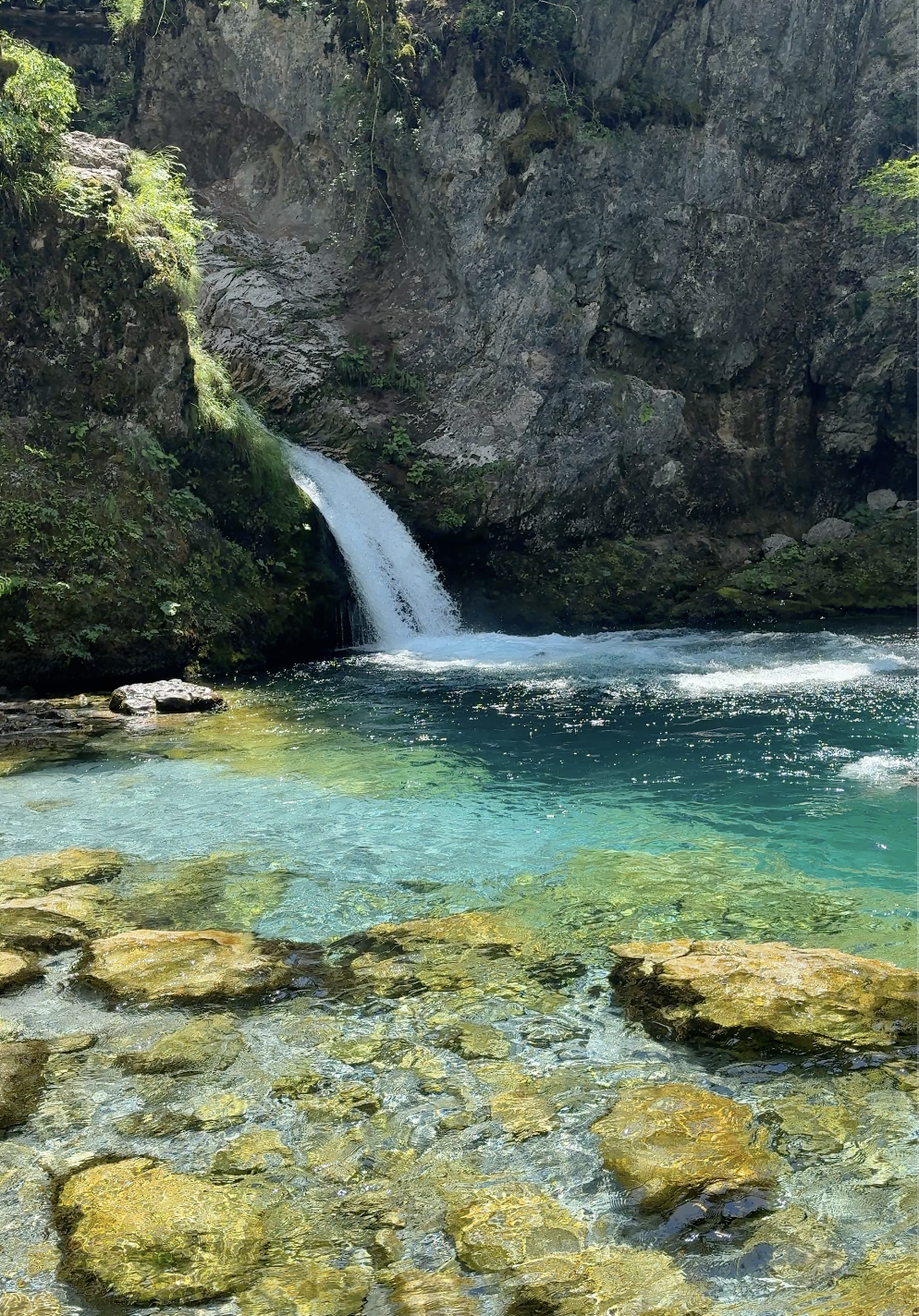
The Blue Eye
Tourism Supports the Trail, but It Also Changes It
The cafés and refreshment stops along the Blue Eye route are a good example of how tourism can support a local area.
Hikers buy water, coffee, food, and other refreshments.
That creates income for people who live and work there.
At the same time, a busy trail also brings more bottles, packaging, vehicles, noise, and foot traffic.
Both things can be true.
Tourism can create opportunity.
It can also put pressure on the environment.
That is why the small choices matter.
Carry out what you bring in.
Use a refillable bottle when possible.
Do not leave trash behind.
Stay on the trail.
Respect the land and the people working there.
None of that is complicated.
It is basic consideration.
Picking Wild Strawberries on the Way Down
On the way down from Theth, we stopped and picked wild strawberries growing along the roadside.
They were tiny, bright red, and much smaller than the strawberries you usually see in a grocery store.
It was such a simple moment, but it stayed with me.
We were not rushing.
We had time to stop, look around, and notice what was growing around us.
That is one of the things I appreciate about slower travel.
You leave room for the experiences that were not scheduled.
You may remember the mountain view, but you also remember standing beside the road eating tiny wild strawberries from your hand.
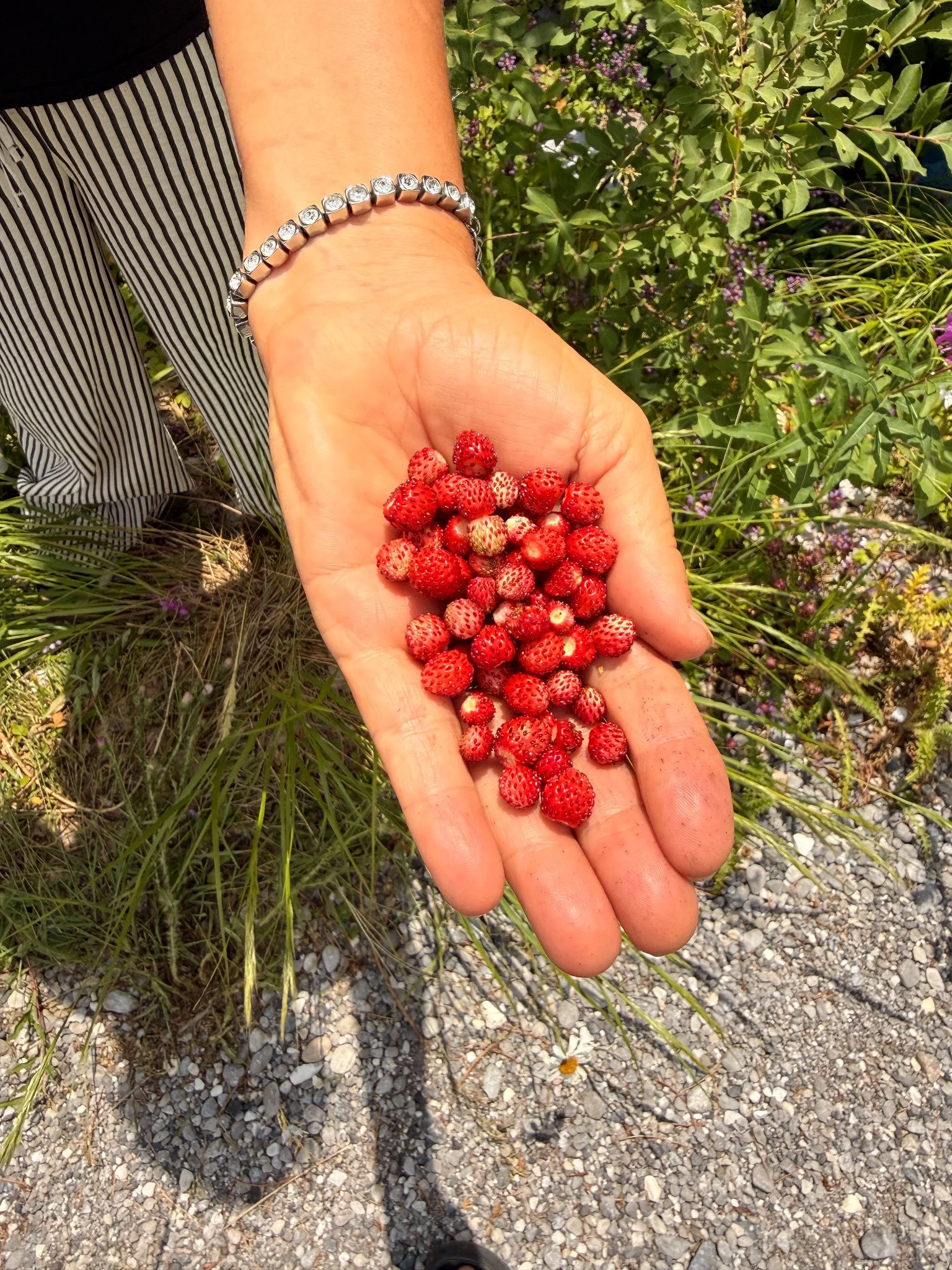
Wild Strawberries
Hotel Vermoshi Near the Montenegro Border
We also stayed at Hotel Vermoshi in Vermosh, close to the border with Montenegro.
Vermosh felt very different from Theth.
It was quieter.
There were fewer crowds.
The area felt peaceful and open, with mountain views and a slower rhythm.
Hotel Vermoshi was comfortable, clean, and surrounded by the kind of scenery that makes you want to stay outside longer.
It felt less tourist-heavy than Theth.
That does not automatically make one destination better than the other.
They simply offer different experiences.
Theth has more activity, more hikers, and more developed tourism.
Vermosh felt calmer and less crowded.
Seeing both helped me understand how tourism can affect communities differently, even within the same region.
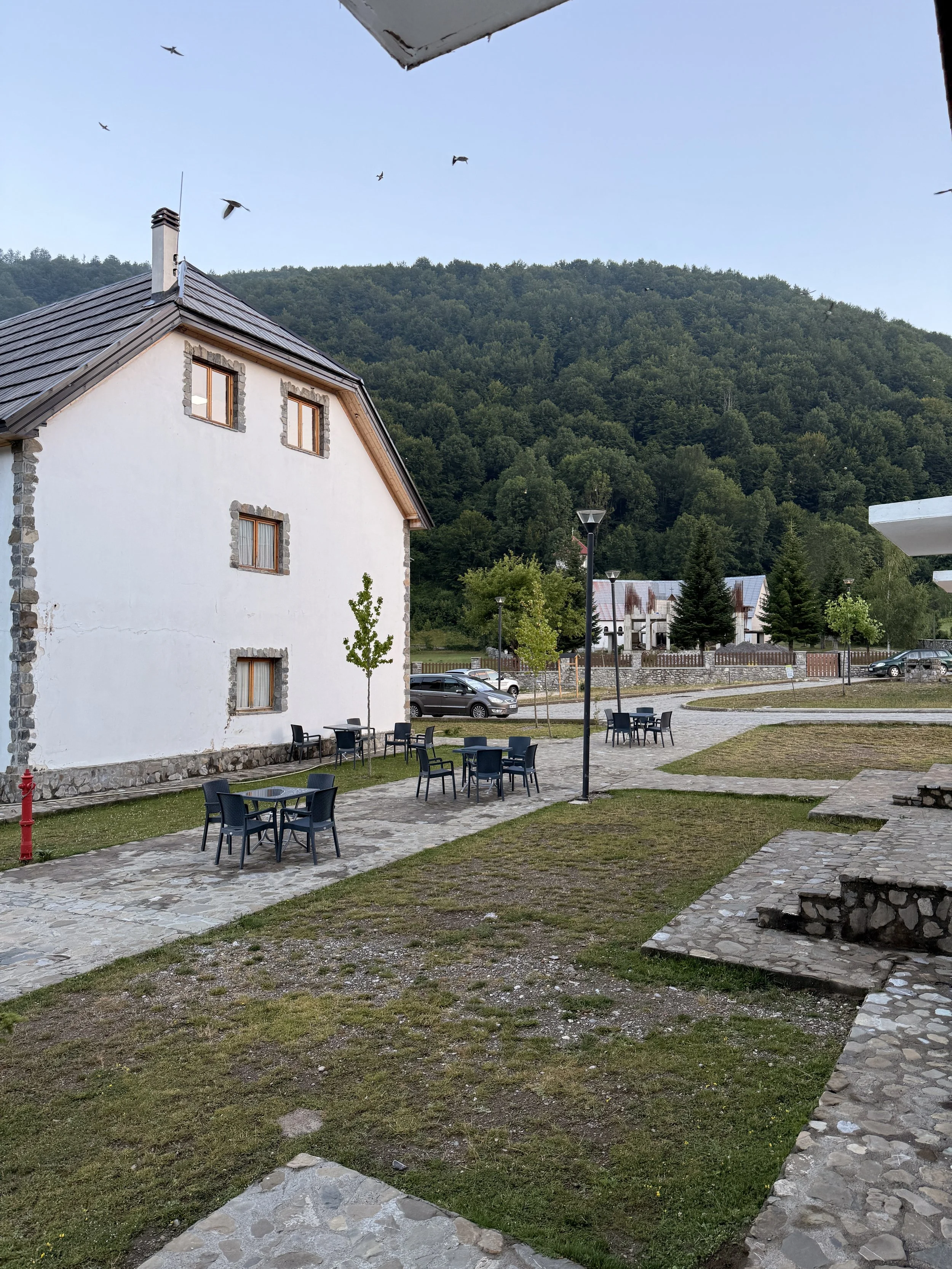
Hotel Vermoshi Patio area
Sustainable Travel Does Not Have to Mean Roughing It
I also do not believe sustainable travel has to mean being miserable.
At this stage of my life, I am not interested in proving anything by sleeping on the floor, carrying everything on my back, or taking a 14-hour bus when there is a more practical option.
I want to travel responsibly, but I also want to be comfortable.
Those two things are not opposites.
You can stay in a clean hotel.
You can travel by car.
You can eat in restaurants.
You can enjoy yourself.
The question is how you make those choices.
Are you rushing through multiple destinations just to collect photos?
Are you supporting local businesses?
Are you creating unnecessary waste?
Are you respecting the place?
Are you prepared for the activities you choose?
Are you treating the community like someone’s home or like a playground built for tourists?
That is where sustainability becomes more than a label.
What Northern Albania Taught Me
This trip taught me that sustainable travel does not have to look perfect.
For us, it looked like carrying breakfast supplies and snacks.
Eating at local restaurants.
Staying at Hotel Vermoshi and Logu i Harushave.
Refilling water from a mountain spigot.
Hiking instead of driving to every attraction.
Picking wild strawberries along the road.
Taking our time.
And paying attention to the places we moved through.
The biggest lesson was that travel does not always need to be faster, bigger, or more elaborate.
Sometimes it is enough to go somewhere, stay a while, spend locally, leave as little waste as possible, and actually notice where you are.
That is the kind of travel I want to do more of.
Planning your own scouting trip or thinking about moving abroad? One of the best ways to understand a country is to experience it beyond the tourist attractions. If you're trying to decide whether a place is right for you, book a FREE 15-minute Move Abroad Clarity Session and let's talk through your options.
